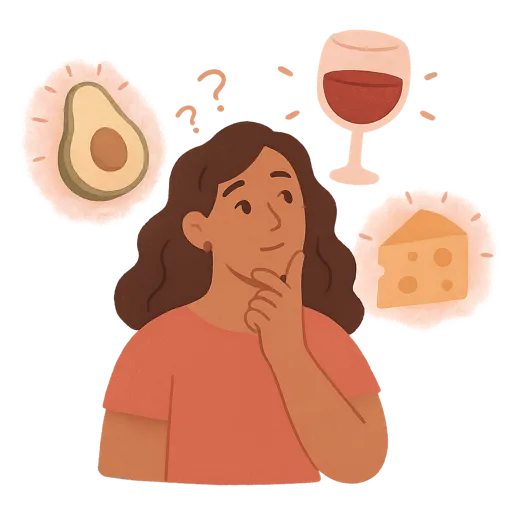
Imagine eating avocado, fermented foods, and aged cheese—all “healthy” choices—and feeling worse. If this sounds familiar, histamine intolerance might be the missing piece of your puzzle.
What is Histamine?
Histamine is a chemical your body produces and that occurs naturally in certain foods. It’s essential for immune function, digestion, and your nervous system. Problems arise when you have more histamine than your body can break down.
This isn't an allergy—it's an intolerance. Your body can handle some histamine, just not as much as others can.
Common Symptoms
- Headaches or migraines
- Hives, flushing, or itching
- Digestive issues (bloating, diarrhea)
- Nasal congestion or runny nose
- Anxiety or racing heart
- Fatigue
High Histamine Foods
- Fermented foods (kimchi, sauerkraut, kombucha)
- Aged cheeses
- Cured meats
- Alcohol (especially wine and beer)
- Vinegar and pickled foods
- Tomatoes, spinach, avocados
- Leftover foods (histamine increases over time)
The key insight? Fresh is best. Histamine levels increase as food ages. Eating fresh, avoiding leftovers, and tracking your reactions can help you find your personal threshold.
Finding out you’re histamine intolerant can actually be liberating—finally, an explanation for symptoms that never made sense.